|
|
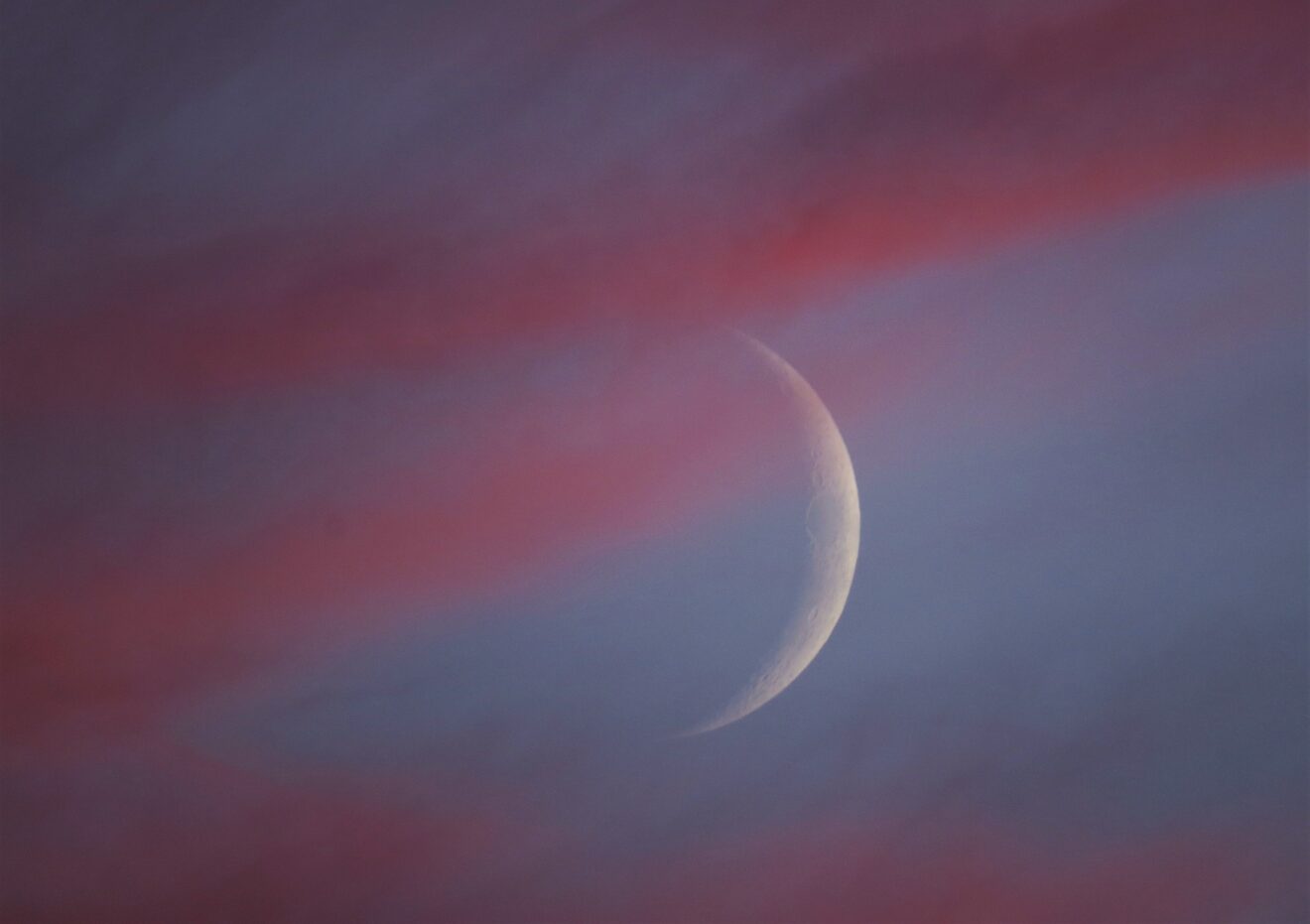
Kislev 178 New Moon Report
|
|
Report
The New Moon was not sighted before Sabbath in the vicinity of Jerusalem (and hence we assume it did not appear at the holy Mount of Olives) due to the anticipated cloud cover. Therefore, the eighth month we are in will be a full month of 30 days, and the New Moon Day will follow the Sabbath.
|
You can now mark the numeric lunar days on your calendar, and please go to the updated link at the end of this report to print it off (corrected for changing 'Asiri New Moon watch' to the new naming of 'Tebeth', with other 'New Moon Watch' names changed as well); then number off the days from 1 to 28 at the top of each day, starting with Solar Day 252. Yes, you heard correctly: '28'. We have a very rare opportunity of having a very short month of 28 days; however, that will not happen if it is very cloudy on the 28th like it was this month. We can continue marking days this month if there is no sighting
|
Important Kislev Events in Biblical History
|
17th: Ezra summoned all men of Judah and Benjamin to Jerusalem for the marital purge. They gathered on the 20th (Ezra 10:9).
|
25th: The dedication of the temple in 165 BCE, hence restoring Judaism;. prior to that, it was banned. Hence, the beginning of the ancient Feast of Dedication (Hanukkah).
|
Also, in this month was Jeremiah’s vision concerning the coming exile, which was read to the people by Baruch and passed on to King Jehoiakim, who rejected it (Jer. 36); and another happening was Nehemiah receiving word of the state of Jerusalem and spent days in mourning, fasting and prayer. We do not know the exact days that these events occurred.
|
Meaning of Kislev
‘Kislev’ means ‘Hope’. The theme fits well with what happened in the time of Judas Maccabeus. The Greek king Antiochus Epiphanes ('God Manifest') typified the antichrist, who is ultimately Satan, who will stand on the Mount of Olives pretending to be the Messiah and claiming that the Sabbath has been changed to Sunday, with the death decree against Sabbath-keeping in force. But in the end, he will be forced to leave and the true God Manifest will gather His saints above the mount. We can have the hope that good will win over evil in the end; light will conquer darkness.
|
Feast of Dedication
To celebrate this hope, Christians can celebrate their own Feast of Dedication. The ancient feast began on the 25th of the 9th month and ran for eight days (like the spring and fall biblical festivals), falling near the winter solstice—the darkest time of year for the northern hemisphere. And this year it begins right on the day of the Winter Solstice, so mark your calendar (I just did 'Dedication 1, Dedication 2, and so on right under the parenthetical Gregorian dates). It was originally instituted by Judas Maccabeus to celebrate the dedication of the temple after regaining control of the temple on the 25th of the ninth month in 165 BCE. Prior to that, the Jewish religion had been banned by the Greek Seleucid government.
|
"The king had sent letters by messengers unto Jerusalem and the cities of Judah that they should follow the strange laws of the land, and forbid burnt offerings, and sacrifice, and drink offerings, in the temple; and that they should profane the Sabbath and holy days: and pollute the holy place and holy people." Maccabees 1:44-46
|
This was done by the Seleucid King Antiochus Epiphanes (which means ‘God Manifest’) standing in the holy place, and was a type of the abominations to come when history is repeated. Antiochus Epiphanes was defeated; thus, God preserved His people, so that Jehoshua the Messiah could come and truly deliver them. The story can be found in the first and second books of Maccabees in the Old Testament apocrypha, where it is written:
|
"Judas and his brethren with the whole congregation of Israel ordained, that the days of the dedication of the altar should be kept in their season from year to year by the space of eight days, from the twenty-fifth day of the month Kislev, with mirth and gladness." 1 Maccabees 4:59
|
The feast has also been called the Feast of Lights because of the miracle of oil for the Candlestick lasting for eight days when they only had enough oil to normally last for a day when the temple was being dedicated. Antitypically, the five wise virgins, representing the faithful at the end of time, will have their midnight oil burning as they await the coming of the Bridegroom. They are dedicated to Him in preparing for His wedding, through letting the oil of His Spirit fill their vessels, representing themselves, who are to be temples of that Holy Spirit, manifesting His glory (see 1 Cor. 3:16; Mal. 3:1).
|
Meaningful happenings in the past are also associated with this feast to celebrate; they are recorded in John, Chapters 8 to 10.
|
"And it was at Jerusalem the Feast of Dedication, and it was winter. And Jehoshua walked in the temple in Solomon’s porch. Then came the Jews round about Him, and said unto Him, “How long dost thou make us to doubt? If thou be the Messiah, tell us plainly.” Jehoshua answered them, “I told you, and ye believed not: the works that I do in My Father’s Name, they bear witness of Me.”" John 10:22-25
|
After that He said, “I and My Father are one” and “the Father is in Me, and I in Him” (vv. 30, 38). Thus, Jehoshua, who was God manifest in human flesh, appeared in Jerusalem where the false God Manifest once stood. God was manifest by the works He did in His Father’s Name, and then He testified that He was God by His very nature.
|
During the same event in Jerusalem, He spoke these words:
|
I am the Light of the World: he that followeth Me shall not walk in darkness, but shall have the light of life. 8:12
|
|
In Matthew 5:14, He also said to His disciples, “Ye are the light of the world.” This means that we can celebrate the miracle of Immanuel: God with us. And we can celebrate Jehoshua as the Light of the World—not just 2,000 years ago, but today in His Assembly. It is the miracle of the incarnation: the Word made flesh, the Messiah in us, the hope of glory!
|
We manifest the Messiah by our works, just as He manifested the Father through His faithful works when He was here.
|
|
For the celebration, lights can be hung at home and in the Assembly, with night services. My wife and I like to keep our lights hung up for both the ninth and tenth months, since the eight days fall within both months, and we light candles for the eight days. It is very cheerful to have in the dark night of winter. But most importantly, the lights can remind us of the Messiah.
|
Since it is also during the Xmas season, we can sing carols and give gifts of truth-filled literature, using this season to practically be the light of the world in our communities. The Assembly services can include sharing testimonies of the literature work, as well as sharing studies or sermons on such subjects as the mystery of piety (Godliness), being the light of the world, and the incarnation.
|
|
It would have been close to this time of year, if not during the Feast of Dedication, when the Light of the World was conceived in Mary, close to nine months before His birth during or near the week of Tabernacles.
|
Festivities can include hanging stringed lights in the house for the entirety of Kislev and Tebeth—the two months in which the feast falls—and burn candles during the eight days of the feast itself.
|
|
As for the surprise... it is delayed.
|
We will send you a separate email when it is ready.
|
New Moon Blessings,
Ricky and Amanda Bokovoy
|
|
|
|
|
|
|
We hope you'll visit us soon!
|
  
|
|
|
|